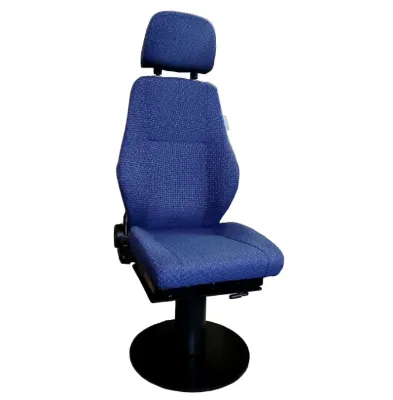
Source luxury leather captain seat with touch control for Yacht, Boat, RV
Explore 30 listings for a luxury leather captain seat with touch control designed for marine and recreational vehicles. Buyers can compare specifications, materials, and customization options from verified suppliers in China.
Key considerations
Products List




Comprehensive Sourcing Guide
Sourcing Guide for Luxury Leather Captain Seats with Touch Control
The procurement of a luxury leather captain seat with touch control represents a specialized segment within the marine and high-end automotive seating market. Buyers seeking this specific configuration must navigate a landscape where aesthetic customization, material integrity, and functional ergonomics converge. The core keyword suggests a product designed for premium environments, such as yachts, luxury boats, or high-specification recreational vehicles, where the captain's position demands both superior comfort and advanced operational interfaces. This guide synthesizes available product attributes and industry standards to provide a disciplined framework for evaluating potential suppliers and defining technical requirements without relying on unverified claims.
Technical Specifications and Material Integrity
When defining the technical parameters for a luxury captain seat, the material composition is the primary differentiator. The supplied data indicates that "Leather" is a standard attribute, with specific mentions of "A Class" leatheriness and "Real Leather" or "Yacht Leather" as distinct material options. For a luxury application, the distinction between standard automotive leather and marine-grade "Yacht Leather" is critical. Yacht leather typically implies enhanced resistance to salt spray, UV degradation, and moisture, which are inherent risks in marine environments. The data also highlights "High Resilience Shaped" sponge as a core component, suggesting that the internal cushioning is engineered to maintain its form under prolonged use and varying load conditions.
Structural integrity is equally vital. The observed specifications include an "Aluminum Alloy" chair frame and a "Marine Anodized Aluminum Alloy Square Column" base. This combination points to a design prioritizing corrosion resistance and weight reduction, essential for vessel stability. The base construction often dictates the seat's footprint and mounting compatibility. Buyers should verify that the anodized finish meets specific salt-spray resistance thresholds appropriate for the intended operating environment. Furthermore, the "Pneumatic" height adjustment mechanism with a "150mm" lifting stroke and "180mm" back-and-forth movement indicates a focus on ergonomic adjustability. The "360 Degree" seat rotation and "Multi-Angle" locking mechanisms are standard features for captain seats, allowing the operator to pivot between forward navigation and aft-facing social interaction.
Compliance, Certification, and Standard Verification
Navigating the regulatory landscape for marine and automotive seating requires careful attention to established standards. The provided facts list "ISO," "ANSI," and "ASTM" as observed standards. While these are broad categories, their presence in a product listing suggests a baseline commitment to international quality and safety protocols. Specifically, the data references "ECE R44," a standard often associated with child restraint systems, which appears in the context of "Baby Seat Standard." For a luxury captain seat, the relevance of ECE R44 is likely indirect, serving as a proxy for the supplier's familiarity with rigorous safety testing regimes.
Buyers must verify that the specific seat model complies with marine-specific regulations, such as those from the International Maritime Organization (IMO) or local coast guard authorities regarding fire retardancy and structural stability. The "Custom" standard noted in the data implies that many suppliers offer bespoke configurations. In this scenario, the burden of proof shifts to the supplier to demonstrate that their custom engineering meets the relevant safety codes for the specific vessel type. The "ISO 9001" standard is mentioned in the background context; while not a direct product attribute, it indicates a supplier's commitment to quality management systems. Buyers should request current certification documents to ensure the manufacturing process adheres to these quality benchmarks.
Cost Drivers and Pricing Dynamics
The pricing structure for luxury captain seats is influenced by a complex interplay of material costs, customization levels, and order volume. The observed price range in the market spans from $20 to $2,000 USD. This wide variance suggests that the "luxury" designation is not a fixed price point but a function of the specific materials and features selected. A seat utilizing "A Class" real leather with a pneumatic lift and anodized aluminum base will naturally command a price at the higher end of this spectrum, whereas a basic model with synthetic upholstery and manual adjustments may fall near the lower bound.
Minimum Order Quantity (MOQ) is a significant cost driver. The data presents a fragmented view of MOQs, ranging from 2 pieces to 500 pieces. A buyer seeking a single unit for a personal yacht might find a supplier with a low MOQ of 2 PCS, but this often comes with a higher unit cost due to the lack of economies of scale. Conversely, fleet operators or dealerships ordering 500 PCS can leverage bulk pricing, though this requires a substantial upfront capital commitment. The "Customized" attribute and "Available" customization options further inflate costs, as bespoke engineering requires dedicated tooling and labor. Buyers should anticipate that "OEM" (Original Equipment Manufacturer) services, which allow for branding and specific design integration, will add a premium to the base price.
Typical Applications and Usage Scenarios
The versatility of the luxury captain seat is evident in its listed applications. The data explicitly cites "Yacht," "Boat," "RV," and "Marine Boat" as primary usage categories. This confirms that the product is designed to withstand the rigors of marine environments while offering the comfort expected in recreational vehicles. The "Replace/Repair" purpose indicates that these seats are often sourced as direct replacements for existing, worn-out units in older vessels, requiring precise dimensional matching. The observed specification of "440mm590mm430mm" provides a concrete reference for the physical footprint, which is essential for verifying fitment in existing helm stations.
The "Color" options, including "Black," "White," "Gaizzly," "Blue," and "Yellow," as well as "Beige & Black" combinations, highlight the aesthetic flexibility required for luxury interiors. The "Colorful" option suggests further customization potential for branding or thematic matching. The "Front Row" and "Back Row" position attributes indicate that the same product line may be adaptable for different seating arrangements within a vessel. For a captain seat, the "Front Row" designation is paramount, ensuring that the ergonomic adjustments and visibility are optimized for the operator. The "Mildew Proof" and "UV Resistant" advantages are particularly relevant for open-deck yachts where exposure to the elements is constant, ensuring the leather and upholstery do not degrade prematurely.
Supplier Evaluation and Sourcing Strategy
Evaluating suppliers for this specialized product requires a rigorous due diligence process. The data identifies "Shandong, China" as a primary place of origin, a region known for its manufacturing capabilities in furniture and automotive components. However, geographic origin alone does not guarantee quality. Buyers should prioritize suppliers who explicitly offer "OEM" services and demonstrate a clear understanding of "Customized" requirements. The presence of "High" quality attributes in the product descriptions is an observation, not a guarantee; therefore, verifying the supplier's track record is essential.
When assessing potential partners, buyers should request detailed product data sheets that confirm the "Leather" grade and the specific "Standard" compliance. The "Packing" methods, ranging from "Carton" to "Carton+Pallet" or "Plastic and Wooden Box," are critical for logistics planning. Heavy items like captain seats with aluminum frames require robust packaging to prevent damage during transit. The "Single Item" packing option may be suitable for small orders but could increase shipping costs per unit. Additionally, the "Payment Term" of "T/T" (Telegraphic Transfer) is standard in international trade, but buyers should negotiate terms that protect their interests, such as a deposit upon order confirmation and the balance upon shipment or inspection.
Quality Control and Long-Term Procurement Considerations
Ensuring the longevity of a luxury captain seat involves a proactive quality control strategy. The "High Resilience Shaped" sponge and "Aluminum Alloy" frame are key indicators of durability, but these components must be inspected for defects before final assembly. Buyers should verify the "Locking" mechanisms for the 360-degree rotation and the pneumatic lift to ensure they operate smoothly and hold position securely under load. The "Multi-Angle" locking feature is particularly important for safety, preventing unintended movement while the vessel is underway.
For long-term procurement, the availability of spare parts and the supplier's after-sales service are critical. The "Service" attribute listed as "OEM" suggests that the supplier may offer support for custom orders, but buyers should clarify the scope of this service. Does it include technical support for installation, or does it extend to warranty claims? The "Condition" of the product is listed as "New," which is standard, but buyers should confirm the warranty period and the policy for handling defects. Given the "Customized" nature of many orders, lead times can vary significantly. While specific lead times are not provided in the data, the complexity of custom leather work and aluminum fabrication suggests that buyers should plan for extended production windows.
Comparative Analysis of Product Attributes
To facilitate decision-making, the following table summarizes the key attributes observed in the market for luxury captain seats, highlighting the variability buyers must navigate.
| Attribute Category | Observed Options / Specifications | Procurement Implication |
|---|---|---|
| Material | Leather, A Class, Real Leather, Yacht Leather | Verify marine-grade certification for salt/UV resistance. |
| Frame/Base | Aluminum Alloy, Marine Anodized Aluminum Square Column | Confirm anodizing thickness for corrosion protection. |
| Adjustability | Pneumatic Height (150mm), Move Back/Forth (180mm), 360° Rotation | Test mechanisms for smooth operation and locking stability. |
| Dimensions | 440mm590mm430mm (Standard Spec) | Critical for verifying fitment in existing helm stations. |
| MOQ | 2 PCS to 500 PCS | Align order volume with budget and storage capacity. |
| Packaging | Carton, Carton+Pallet, Plastic/Wooden Box | Ensure packaging prevents damage during international shipping. |
| Standards | ISO, ANSI, ASTM, Custom | Request specific test reports for marine safety compliance. |
| Origin | Shandong, China | Factor in logistics and potential tariff implications. |
Final Procurement Recommendations
Sourcing a luxury leather captain seat with touch control requires a balance between aesthetic desires and technical rigor. The market offers a wide range of options, from basic replacements to fully customized, high-specification units. Buyers must carefully evaluate the "Yacht Leather" claims against their specific environmental needs and verify the structural integrity of the aluminum components. The presence of "Custom" standards and "OEM" services indicates that the market is flexible, but this flexibility comes with the responsibility of clear communication and rigorous quality assurance.
By focusing on the verified attributes such as the "High Resilience" sponge, "Anodized" base, and specific dimensional constraints, buyers can mitigate the risks associated with unverified claims. The wide price and MOQ ranges necessitate a tailored approach, where the order volume is aligned with the budget and the material specifications are matched to the vessel's operating conditions. Ultimately, the success of the procurement lies in the buyer's ability to distinguish between marketing observations and verifiable product facts, ensuring that the final selection delivers the expected luxury and performance.
FAQs
What materials are used for luxury leather captain seats?
These seats typically use A Class, Real, or Yacht Leather with high resilience shaped sponge. The frame is constructed from aluminum alloy, and the base often features marine anodized aluminum for corrosion resistance in marine environments.
Which customization options are available for these seats?
Customization is available for color, size, and specific branding through OEM services. Buyers can select from colors like black, white, or beige and request custom dimensions or specific leather grades to match their vessel's interior requirements.
Can these seats be installed in existing yacht helm stations?
Yes, they are designed for replacement and repair with standard dimensions of 440mm by 590mm by 430mm. This size allows for direct fitment in many existing marine boat and RV configurations without requiring major structural modifications.
How does the seat adjust for operator comfort?
The seat features pneumatic height adjustment with a 150mm lifting stroke and 180mm back-and-forth movement. It also includes 360-degree rotation with multi-angle locking to ensure stability and ergonomic positioning for the captain.
What standards do these marine seats comply with?
Products often adhere to ISO, ANSI, and ASTM standards for general quality and safety. While specific marine certifications vary, the presence of these standards indicates a baseline commitment to international manufacturing protocols and structural integrity.
What is the minimum order quantity for purchasing these seats?
Minimum order quantities vary significantly, ranging from 2 pieces for single units to 500 pieces for bulk orders. Buyers should check specific supplier listings to find options that match their order volume and budget constraints.
Where are these luxury seats typically manufactured?
The primary place of origin for these products is Shandong, China. This region is known for its manufacturing capabilities in automotive and marine furniture components, offering a wide range of suppliers for international procurement.